Showing posts with label drawing. Show all posts

Hand-Drawn Lettering and Experimental Typography


This beautifully hand drawn alphabet is by Blake E. Marquis.

Graphic designers take note, there is an interesting traveling exhibition, titled Alphabet: An Exhibition of Hand-Drawn Lettering and Experimental Typography, which can be viewed now in Orlando, coinciding with the AIGA Conference.

“Focusing on an ordinary subject that we see each day, often in the hundreds of thousands, Alphabet presents 26 letters as more than just shapes for conveying information. The 48 artists and designers in this show conceive and interpret the alphabet in surprising and inventive ways, ranging from graceful and polished to witty and unconventional. The 60 alphabets featured in Alphabet were created by artists in North America, Europe, and Asia, and represent work from well-known typographers and designers as well as rising artists and design students.” – excerpt from the exhibition website.

ALPHABET GALLERY
Below are selected samples of some of the alphabets shown in the exhibition. Complete character sets (A-Z) of each alphabet in the show can be seen in the exhibition catalog or at one of the exhibition venues.

ANDREW BYROM / INTERIORS / 2003
A set of 26 table and chair frames built from steel tubing, Interiors forms a lowercase alphabet when viewed from certain angles. While some of the letters such as the h, m, and b look like basic chairs or tables, others like the e, t, and x become abstract, rather than functional, furniture.
Fabrication: Joel Wolter

LUKE RAMSEY AND A. PURDY / HYPER TYPE / 2005
Representing the pair's first collaboration, Hyper Type's obsessively detailed letterforms were created by Ramsey and Purdy in two marathon, ten-hour days.

APIRAT INFAHSAENG / SEVEN BOARD OF CUNNING / 2004
Constructed with Chinese Tangram puzzle tiles, Seven Board of Cunning takes the concept of Tangrams--that the tiles may be arranged into a variety of shapes--and applies it to typography, creating multiple versions of each letter.

MICHAEL STOUT (VISUALINGUAL) / IMAGEABILITY, PATHS / 2002
Pushing the limits of legibility, Imageability is a series of five fonts based on ideas from the book of the same title by Kevin Lynch. By reducing each letter to a minimal set of forms, Imageability explores the identifiers we use to navigate our landscape and language.

Exhibition info:
Website

Travel information
Alphabet will be traveling through 2008. Upcoming and past shows include:
October-November 2008 / Southern Illinois University / Edwardsville, IL
December 2007 / Ohio Northern University / Ada, OH
October 2007 / Cooper Union / New York, NY
July 2007 / AIGA Orlando / Orlando, FL
February-March 2007 / Minneapolis College of Art & Design / Minneapolis, MN
January 2007 / Pennsylvania College of Art & Design / Lancaster, PA
November 2006 / Northern Illinois University / DeKalb, IL
March 2006 / Workhorse Gallery / Los Angeles, CA
January-February 2006 / M-80 / Milwaukee, WI
November 2005 / Heaven Gallery / Chicago, IL
August 2005 / Lump Gallery / Raleigh, NC
July 2005 / Maryland Institute College of Art / Baltimore, MD

Select list of artists, designers and students, who are featured in the exhibit:
Andrew Byrom
Danielle Foushee
Arjen Noordeman
Paul Nudd
C.W. Roelle
Visualingual

One Point Perspective: Adoration of the Magi


Adoration of the Magi, by Leonardo da Vinci. "The preparatory drawing for the “Adoration of the Magi,” the painting commissioned to da Vinci for the main altar of the monastery of San Donato a Scopeto near Florence, reveals the Italian genius’s innovative approach to art. His originality and mastery of perspective are evident in the magnitude of the illusionary space that he created. He drew the ground first, then a plan for the buildings and finally animated the scene with human figures and animals. Using a millimetric ruler, appointed stylus and very fine threads, da Vinci created the perspective grid to transfer the drawing on a larger scale as a painting on a wooden panel." From Share the Perspective of Genius: Leonardo's Study for the Adoration of the Magi, an online exhibition hosted by The Library of Congress.

Leonardo da Vinci's work is really wonderful to look at when learning about drawing, not only how to draw in perspective, but also how to build form with line, to represent volume, to diagram, to explain thoughts, and so on.

With regard to perspective, as it is represented in Adoration of the Magi, see the following observations: Notice vanishing lines lead to a central point, called the central vanishing point. There is only one vanishing point in this drawing, and therefore we call it a one-point perspective drawing. The point at which the central vanishing point sits is called the eye level, or horizon line. For those viewers who are are not familiar with thinking of space depicted in perspective, note how objects that are closer to the viewer are larger, and objects that are more distant appear to be smaller. Imagine standing on a long stretch of flat road. One can see the painted lines of the road converging and eventually merging at a place where the road seems to disappear. It is that point which is called the "vanishing point."

The Museum of Science has an online exhibition, Leonardo da Vinci: Scientist, Inventor, Artist, featuring Leonardo da Vinci. Below is an exerpt from one section, titled Artist:

"Leonardo got his start as an artist around 1469, when his father apprenticed him to the fabled workshop of Verocchio. Verocchio's specialty was perspective, which artists had only recently begun to get the hang of, and Leonardo quickly mastered its challenges. In fact, Leonardo quickly surpassed Verocchio, and by the time he was in his early twenties he was downright famous.

Renaissance Italy was centuries away from our culture of photographs and cinema, but Leonardo nevertheless sought a universal language in painting. With perspective and other realistic elements, Leonardo tried to create faithful renditions of life. In a culture previously dominated by highly figurative and downright strange religious paintings, Leonardo's desire to paint things realistically was bold and fresh. This call to objectivity became the standard for painters who followed in the 16th century.

No slouch when it came to the techniques of the day, Leonardo went beyond his teaching by making a scientific study of light and shadow in nature. It dawned on him that objects were not comprised of outlines, but were actually three-dimensional bodies defined by light and shadow. Known as chiaroscuro, this technique gave his paintings the soft, lifelike quality that made older paintings look cartoony and flat. He also saw that an object's detail and color changed as it receded in the distance. This technique, called sfumato, was originally developed by Flemish and Venetian painters, but of course Super-Genius Leonardo transformed it into a powerful tool for creating atmosphere and depth.

Ever the perfectionist, Leonardo turned to science in the quest to improve his artwork. His study of nature and anatomy emerged in his stunningly realistic paintings, and his dissections of the human body paved the way for remarkably accurate figures. He was the first artist to study the physical proportions of men, women and children and to use these studies to determine the "ideal" human figure. Unlike many of his contemporaries -- Michelangelo for example -- he didn't get carried away and paint ludicrously muscular bodies, which he referred to as "bags of nuts."

All in all, Leonardo believed that the artist must know not just the rules of perspective, but all the laws of nature. The eye, he believed, was the perfect instrument for learning these laws, and the artist the perfect person to illustrate them."

The Invention of Drawing: An Artist Reveals Perspective


The Getty Museum has this wonderful drawing, The Invention of Drawing, which documents one method of drawing. Illustrated here is an artist tracing the shadow of her model. Notice how the drawing is a precise rendering, done in two-point perspective. A single flame provides the light source for all of the shadows. The drawing contains a full range of values, from lightest lights to darkest darks. The horizon line, or eye level, is low, almost, if not exactly where the pencil touches the wall. Perspective lines are dramatically featured in the wall-mounted shelf, the lines of the furniture, and the stone wall grid.

Perspective drawing is a method of representing the appearance of objects, places, architecture and even people. Parallel lines are represented as converging, which gives the illustion of distance. There are many valuable sources to which one can refer in order to understand perspective. The following link is one good example that covers the basics of linear perspective.

Image information:
The Invention of Drawing (recto); Sketch of Lower Leg Bones of Human Skeleton (verso)
Joseph-Benoît Suvée
Belgian, about 1791
Black and white chalk on brown paper (recto); graphite (verso)_21 1/2 x 14 in.
87.GB.145

Ray and Charles Eames: An Illustrated Design Process


Currently teaching two classes, Sketching and Rendering for Industrial Design, and Basic Design, at Rhode Island School of Design, Drawing Connections readers will notice some entries are geared towards students. This is one such entry.

When developing drawing and design skills, it can be tremendously helpful to nearly simultaneously practice drawing and observe drawing practice. Practice. Practice. Find designers who use drawing as a part of their design process. Study the drawings.

The objectives of this exercise include:
1. comparing multiple examples of drawing styles and techniques;
2. understanding the act of drawing is an individual expression, and that each person will have their own drawing voice or style, unique from other people;
3. discovering appropriate drawing materials and substrates for design drawings;
4. considering how drawing can play a significant role in the design process;
5. exploring the use of line, from informal and rapid sketch, to the detailed finished rendering; and
6. seeing how designers employ the visual language of drawing to generate ideas for designs, think through a design problem, communicate plans to other audiences, and document important details in the process.

It does not take long to find a variety of examples, illustrating a considerable, respectable range of drawing approaches, styles and techniques.

For the purposes of participating in the exercise, this article features the work of the married design team, Ray (1912–1988) and Charles (1907–1978) Eames, American designers, who accomplished many works of industrial design, furniture design, art, graphic design, film, and architecture. Below is a photo of Ray and Charles Eames working on an exhibition model.


Below are some additional samples of their drawings. See a doodle-type drawing, by Charles Eames, which is themed about life around the house; collage drawing of an Eames chair, complete with a suite of accessories; and an exploded view of the Eames lounge chair. The bubble diagram, featured at the beginning of this article, illustrates the Ray and Charles Eames design process. If you are interested in learning more about the Eames’ work, explore the following links:
The Eames Office
The Eames Foundation
The Design Museum
“Exhibit: The Work of Ray and Charles Eames: A Legacy of Invention”
The Eames Gallery
Herman Miller


Rendering for Industrial Design: A Look at Raymond Lowey


About This Drawing:
Raymond Lowey created this Skylab rendering on a dark indigo blue background. Line work is done mostly in white pencil and highlights are white gouache paint. The background color is very much a part of the object. See how much of the paper actually shows through the object. Refined details, like parting lines, fasteners, surface texture, and a strong indication of light direction give the viewer plenty of significant information. Notice how the drawing is done in three-point perspective, close to the horizon line, with the vanishing points far off to each side. This effect gives the object a convincing, life-like appearance, as it is one of the most familiar ways one encounters or sees the world around them.

Drawing Tips:
1. Allow the background color to be an active part of the drawing. Avoid overworking the surface. Keep the drawing fresh and unlabored, providing only important information.
2. Include a variety of details that help the viewer understand the object, including clues regarding material, function, texture, weight, scale, volume, and context. Whenever it makes sense to do so, include an indication of human scale, as it will lend volumes of information to the piece.
3. For a convincing portrayal of drawn objects, be aware the principles of perspective. Place objects in the center of the cone of vision and close to the horizon line.
4. Including light and shadow in the drawing will help the viewer understand the figure ground relationship, time of day, light source, and three-dimensional volume.
If you would like to work on this technique, use a Canson toned paper (or similar), Prismacolor colored pencils (or similar), pastel powder mixed with baby powder and gouache.

Lowey Drawings:


About Lowey:
“The Shell logo. The Greyhound bus. The S-1 locomotive. The Lucky Strike package. The Coldspot refrigerator. The Studebaker Avanti. These and many other modern design icons were all created by Raymond Lowey, "the father of industrial design." Arguably one of the most influential designers of the 20th century, Loewy has been called the "man who shaped America." He left his mark countless times on everyday culture from household products, to transportation to corporate identity. Loewy was one of the first designers to understand the link between design and the economy. He expressed this connection by stating: "Between two products equal in price, function, and quality, the better looking will outsell the other."
Raymond Loewy (1893-1986), a brilliant designer and, without doubt, the most versatile ambassador of this discipline, became a design legend in his own lifetime. He was the most influential protagonist of industrial design that North America has ever known and has had a significant impact on the tastes and lifestyles of several generations. Loewy’s design philosophy still has an influence on the industrial design world today.” – This brief excerpt is from Art Net. See http://www.art.net/Lile/loewy/loewy.html

Drawing Research


The Drawing Research Network is a loose affiliation of individuals and institutions who are involved in some way with drawing research, for example via professional practice, education or the promotion of drawing. Some participants are based in universities and colleges of art and design with established teaching and/or research profiles in drawing. Other participants have an interest in, for example, drawing therapy, the cross-curricular role of drawing in schools or digital drawing. Some participants simply have an interest in drawings and the drawing process which might include in making, thinking about and communicating on drawing. Individuals and institutions use the Network to communicate news, to explore possibilities for cooperation in drawing research, to formulate collaborative projects and to share outputs. Membership of the Network is free. Drawing Research Network or, http://www.drawing.org.uk/
Note: If this link does not work, try pasting the URL into the address bar or do a Google search based on "drawing research."

Exhibit: Doodles, Drafts and Designs


Interested in an historical perspective of industrial design drawings and creativity from America? The Smithsonian offers the online exhibit, Doodles, Drafts and Designs: Industrial Drawings. Below are three brief excerpts from the site:

The Creative Process of Drawing for Industrial Design
“Engineers, inventors, and designers produce drawings as part of their creative process. They draw to work out and refine concepts and details. They draw to persuade. They draw to give direction. And they draw to record their ideas and to learn from others.”

Conceptualization
“Drawing is a key element in the process of working out ideas. Drawing moves an idea from the "mind's eye" to paper, the first step along the path from thought to three-dimensional reality. Inventors sketch as they think, developing their ideas on paper more quickly and more easily than they might in model form.”

Presentation
“Industrial drawings convince. By allowing viewers to imagine a building or machine before it is built, drawings make the idea seem real and viable. Gone are the tentative lines of conceptual drawings. With their straight lines, careful shading, and right angles, these images make the technology appear almost inevitable.”

Learn more about the design process, including the important detailing and recording steps. Experience the exhibit and see examples of the industrial design process, illustrated in drawings. Doodles, Drafts and Designs: Industrial Drawings from the Smithsonian is a traveling exhibition developed by the Smithsonian’s National Museum of American History, Behring Center, from the collections of the National Museum of American History and the Smithsonian Institution Libraries. Organized for travel by the Smithsonian Institution Traveling Exhibition Service.

Paperless Drawing and Animation


An animator describes how he utilizes the Wacom Cintiq to do animation, effectively eliminating the need for thousands of paper drawings, during the production process.

Sketching with Cintiq


See an artist sketch directly onto the Wacom Cintiq, a dynamic digital drawing board.

30 Drawing Reference Books for Artists, Designers and Anyone Who Wants to Learn How-To Draw


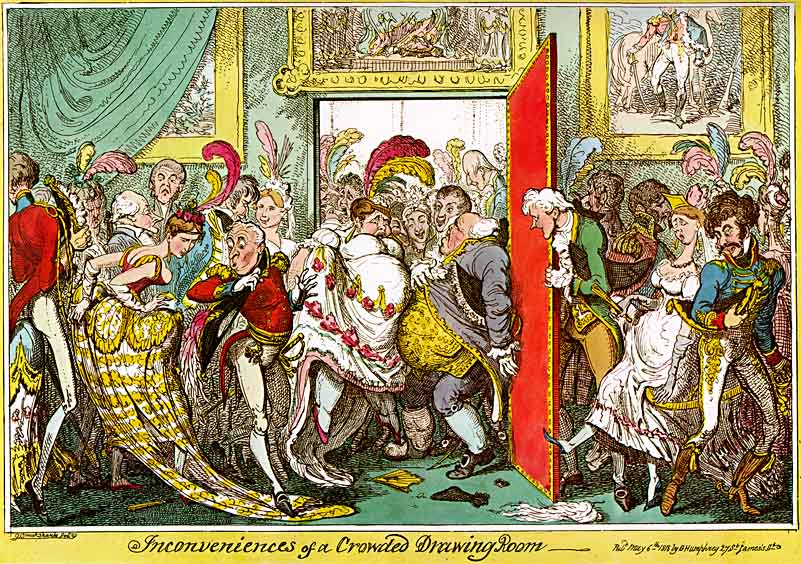
Not so long ago, in Victorian times (1837-1901), the “drawing room” referred to a place for comfortable, relaxed entertaining. The expression is still used in Britain, and in France, the term is “salon,” in the U.S., the equivalent is “living room.” For artists, the drawing room is not confined to one environment, although the studio may be where much of the work is accomplished, it is everywhere the artist is. Drawing happens anywhere, anytime.

Drawing is an empowering life tool accessible to anyone who cares to use it. Perception, communication, persuasion, innovation and invention – drawing develops these skills, which are transferable to any profession or subject.

“If you can draw, even a little bit, you can express all kinds of ideas that might otherwise be lost - delights, frustrations, whatever torments you or pleases you.” – David Hockney

“In the design process, drawing is the act of thought.” – Richard MacCormac

“Drawings are an invaluable aid to my mathematical thinking and an essential ingredient of most of my mathematical expositions.” – Sir Roger Penrose

“I use drawing as an extension of my brain. It is the ones done with spontaneity that give me most pleasure and help crystalise an idea.” – Terence Conran

Learning to draw can be likened to learning a language. It requires exposure, observation, exploration and practice. Learn to draw. Expose your mind to the variety of methods, tools, techniques and forms of drawing. Visit an art museum and observe how artists use drawing. Read books about drawing. Experiment with drawing by trying it out, emulating different styles, using a variety of drawing materials. Make drawing a part of your routine. Make room for drawing.

A German proverb says, “Whoever cares to learn will always find a teacher.” Books are a great place to start. The following is an alphabetical list of recommended books relating to drawing for architecture, animation, exhibit design, fine art, industrial design, and interior design.

1. Drawing in Early Renaissance Italy: Revised Edition
2. Drawing Now: Eight Propositions
3. The Art of Robots
4. Classical Drawing Atelier: A Contemporary Guide to Traditional Studio Practice
5. Art of Drawing

6. Design Drawing
7. Drawing: A Creative Process
8. Drawing and Perceiving: Life Drawing for Students of Architecture and Design
9. Vitamin D: New Perspectives in Drawing
10. Keys to Drawing with Imagination: Strategies and Exercises for Gaining Confidence and Enhancing Your Creativity

11. Color Drawing: Design Drawing Skills and Techniques for Architects, Landscape Architects, and Interior Designers
12. Drawing Lessons from the Great Masters: 100 Great Drawings Analyzed, Figure Drawing Fundamentals Defined
13. Rapid Viz : A New Method for the Rapid Visualization of Ideas
14. Drawing From The Modern
15. Experimental Drawing

16. Drawing Shortcuts: Developing Quick Drawing Skills Using Today's Technology
17. Drawing and Designing with Confidence: A Step-by-Step Guide
18. Freehand Perspective for Designers: Including Shadow-Casting and Entourage
19. Force: Dynamic Life Drawing for Animators
20. Syd Mead's Sentury

21. Basic Perspective Drawing: A Visual Approach
22. Perspective Drawing and Applications
23. Perspective for Interior Designers
24. Drawing: A Contemporary Approach
25. Rendering in Mixed Media

26. From Ordinary To Extraordinary: Art & Design Problem Solving
27. Basic Visual Concepts And Principles For Artists, Architects And Designers
28. The Animator's Workbook: Step-By-Step Techniques of Drawn Animation
29. Life Drawing: A Journey to Self-Expression
30. Design Principles and Problems

Do you have a recommendation? Please share!

Image Reference: "Inconveniences of a Crowded Drawing Room", famous caricature by George Cruikshank, May 6th 1818.

Imaginary City Envisioned in Drawings

In 1984 Gilles Tréhin, dedicated artist and artistic savant, began designing an imaginary city, Dumont d'Urville, using primarily drawings to communicate his vision.


Additional info:
Gilles Trehin.com
Gilles Trehin and the city of Urville

Illustration Friday: Creative Community Forum for Artists

Illustration Friday is the art forum, the mission of which is to build a creative community for illustrators. IF features a weekly illustration challenge. A topic is posted every Friday. Participants have all week to come up with their own interpretation.

"It is a safe place to discuss creative issues, ask questions or just get feedback on your work. Want to find out how to get a certain texture? Ask. Want to find people in your area to start an illustration group? The art forum is a good place to start."
http://illustrationfriday.com

Leonardo da Vinci's Drawing Techniques Revealed


Curious about how Leonardo da Vinci constructed space in his perspective drawings? Visit the online exhibit, Share the Perspectives of Genius: Leonardo's Study for the Adoration of the Magi, hosted by The Library of Congress.
http://www.loc.gov/exhibits/leonardo/

Types of Drawing: Making Marks for Good Reason


As the written word is essential to the poet and writer, and the algorithmic formula is imperative to the mathematician, drawing is the essence of the artist and designer’s expression.

As an effective means of communication and thinking, drawing operates on many levels, and it is important for the artist and designer to not only comprehend these differences, but to also achieve a certain level of skill in the discipline of drawing. Drawing can be a tremendously empowering tool for communication and thinking. This article will briefly explore and loosely define the many different approaches, or types, of drawing.

In thinking about drawing methodologies and their respective purposes, apparent are at least eight distinct categories, including:
1. Life Drawing: drawing as a means of expression; drawing from direct observation, as in still-life or figure drawing
2. Emotive Drawing: drawing, like painting, as an expressive way to explore and put forth feeling, mood, self, time, and so on; drawing as a sensitive expression of personality
3. Sketching: drawing in order to explain or actively think through a problem; drawing through the act of visualizing; drawing actively and loosely
4. Analytic Drawing: drawing as a way to dissect, understand and represent; drawing from observation
5. Perspective Drawing: drawing as a way to represent volume, space, light, eye-level (horizon), surface planes, and scale
6. Geometric Drawing: drawing as a means to precisely represent all aspects of construction; drawing that shows measured scale, true sides, sections, and a variety of descriptive views.
7. Diagrammatic Drawing: drawing in order to investigate, explore, and document concepts and ideas; drawing as an active design process where ideas evolve due to adjacencies and happenstance
8. Illustration Drawing: drawing in order to document; drawing to clearly state and render intent, style, size, color, character, effect, and so on

The marks made for each of these drawing categories vary greatly, as do the materials, tools, techniques, and even substrates on which the drawing is produced. A graphite pencil makes a different mark than a marker, than a vine charcoal stick, than a ballpoint pen, and on and on. Newsprint paper is appropriate for some drawing materials, such as pencil, charcoal and crayon, whereas more wet mediums, such as markers or India ink may prove problematic.

Concurrently, the purpose for each of these drawings categories vary, as do the end result. A sketch can quickly document an idea upon first conception, whereas a geometric drawing requires a much longer gestational period. The sketch is of the moment and the geometric drawing is more labored. The sketch contains possibility and potential, whereas the geometric drawing is more like the ending chapter to a novel, final. The person who makes the drawing must weigh the truth and consequences of the effort, choose the method of drawing that is appropriate, that which will provides the best result.

This is not to say that the act of drawing should not be experimental in nature. To the contrary, investigation is paramount to the creative process and the educational process. Practice drawing, experience using drawing, and exposure to comparative examples of drawing provide one with a greater ability to make choices regarding the appropriate drawing technique, material, surface, tool and approach to utilize when beginning a drawing.

Where words and formulas cannot quite describe the creative intent, drawing succeeds in being a tremendously empowering tool for communication and thinking. The artist and designer is much stronger in her ability to create with this skill mastered.

(Note: For the purposes of this article, computer-aided drawing techniques were not addressed specifically, though the author admires the inherent benefits of computer technology.)

Explore the many drawingreference materials available.